Dice of Kalma: Dice Roguelike
- 4.0
- Rating
- 500.00K
- Installs
- Free
- Price

 Analysis by App-foxy
I went into Dice of Kalma: Dice Roguelike expecting a light dice game and found something more deliberate: a strategy game where each roll asks me to balance immediate progress against the possibility of a much better combination later. Its basic idea is easy to understand, but the decisions become more interesting once poker-style hands and skull combinations start competing for my attention. A good turn is not simply the one with the biggest number. It is the one that keeps the run alive while improving the next choice.
That distinction gives the game its personality. I can play it in short bursts, yet I still feel involved because every action changes the shape of the run. The result is a compact roguelike loop: act, read the outcome, take a reward or accept a setback, then decide whether to push forward or start again. Pepperbox Studios has built the experience around that repeated tension rather than around a large collection of unrelated systems.
It is free to start, rated for Everyone, and currently listed as version 1.4.5 for devices running Android 8.0 or later. The game has reached over 100 thousand installs and holds a 4.2 average from around 1.4 thousand ratings, which fits my impression of a focused title with a growing audience rather than a huge mainstream release. In-app purchases range from $2.99 to $19.99 per item, so I would approach it as a free game first and decide later whether optional spending adds enough value for my own play style.
You May Also Like

 Blood Strike: 2.5 Anniversary
Blood Strike’s Loadouts Turn Every Drop Into a Tactical Gamble
A close look at Blood Strike’s custom loadouts: how fast access to signature weapons reshapes its battle royale rhythm, rewards preparation, and narrows the gap between fights.

 Pandora - Music & Podcasts
Pandora’s Music Is Easy to Start, but Harder to Recover
Pandora’s strength is its low-effort path from a seed to a station. Its weak spot is how much confidence it asks you to place in connection, setup, and quiet recovery.

 8 Ball Pool
 Is Built on Rivalries, Rematches, and Routine
A close look at the rivalries, rematches, shared routines, and unanswered safety questions that turn a quick pool match into a persistent mobile community.

 Samsung Music
’s Quiet Strength Is Playing What You Already Own
Its reach comes less from spectacle than from dependable access to a personal library. That simplicity is both the app’s strongest retention engine and its ceiling.

 AccuWeather: Weather Radar
AccuWeather Review: A Quick, Clear Forecast for Everyday Decisions
For everyday plans, the best forecast is the one you can understand quickly. AccuWeather makes rain timing, radar, and local conditions easy to act on, with a few trade-offs.

 Hill Climb Racing
Why Hill Climb Racing Still Turns Crashes Into One More Run
A tiny car, a bumpy hill and one more upgrade: Hill Climb Racing keeps resurfacing because its simple chaos makes every near-miss feel personal.
More From Our News Desk
View All News


Where the first roll becomes a real decision
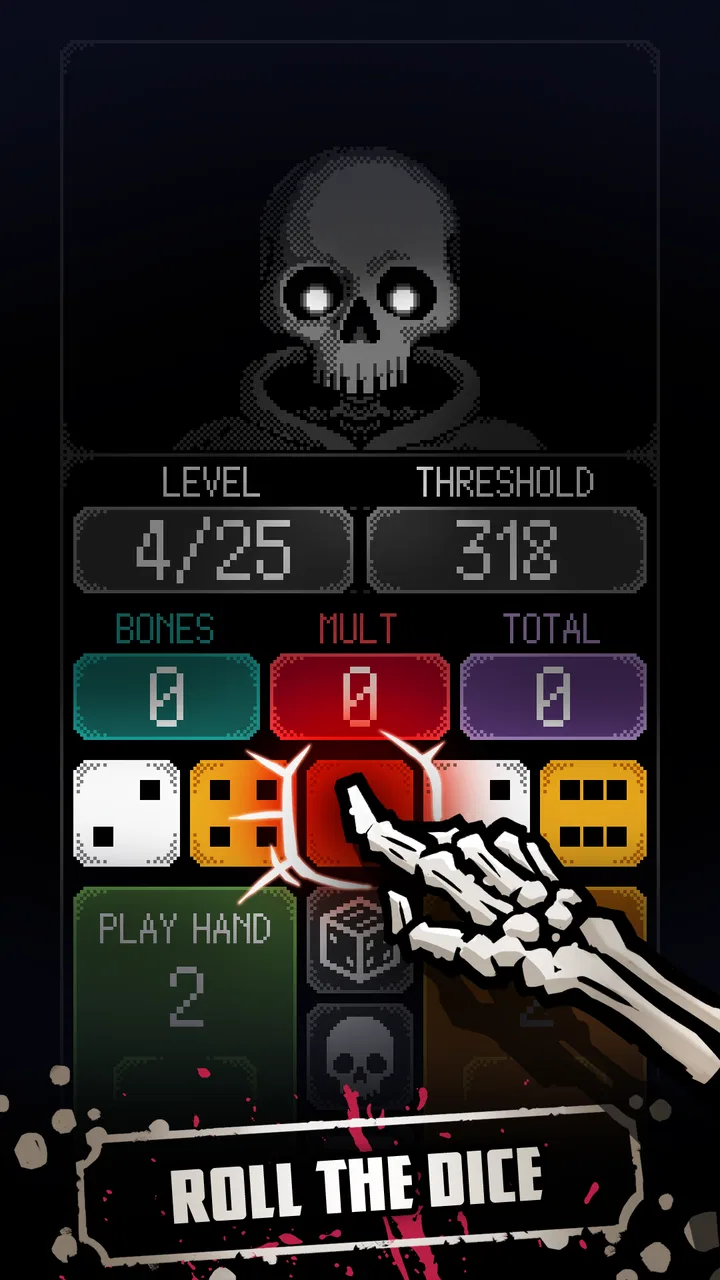
The first action is immediately understandable: I roll dice, look at the result, and try to make something useful from it. The poker-hand element gives the roll a familiar language. Pairs, sequences, and stronger combinations are not abstract symbols; I can recognize their potential quickly, then weigh that potential against the current danger of the run.
What makes the opening move more strategic than a simple dice throw is the presence of skull combinations. They add a second layer to the evaluation. I am not only asking whether the dice form a valuable hand. I am also checking whether the result introduces a threat or an opportunity connected to skulls. That split attention is the first important habit the game teaches, and it prevents the usual “roll and always choose the largest reward” approach from working consistently.
I found it useful to pause briefly after each result instead of tapping through on instinct. The best choice can depend on what I am trying to build, how much risk the current run can tolerate, and whether a modest hand protects a better future turn. This is one of the game’s less obvious strengths: the dice are random, but my response to them does not have to be.
For new players, the practical starting rule is simple. Treat the first few turns as information gathering. Learn how the game presents a successful hand, how skull results affect the run, and which outcomes feel worth chasing. Trying to force a particular combination before understanding the feedback usually makes the early game feel harsher than it needs to be.
Why the poker layer works
Poker hands give the rolls a useful structure without requiring a long tutorial. I already know that a rare-looking arrangement deserves attention, while a weak spread may be better used conservatively. That familiarity lets me concentrate on the game’s own risk decisions instead of learning an entirely new scoring language.
The trade-off is that players who dislike probability-based choices may find the experience frustrating. A carefully planned turn can still produce an awkward roll, and the game’s appeal depends on accepting that uncertainty. I enjoyed this because the randomness creates stories, but anyone looking for a perfectly controlled tactics game should know that Dice of Kalma is not trying to remove luck from the equation.
The skull combinations are also important for the game’s identity. They stop the poker hands from becoming the whole experience and make ordinary-looking results worth inspecting. A roll that seems weak at first glance may matter because of its skull pattern, while an attractive hand may be a poor choice if it pushes the run toward trouble. That is the kind of small contradiction that keeps the opening action from becoming automatic.
The feedback rhythm: action, consequence, and adjustment
After I make a choice, the game gives me the most important kind of feedback: it tells me whether the decision improved the run, created a problem, or opened a stronger route. The rhythm is easy to follow. I act, see the result, collect whatever benefit is attached to it, and immediately begin evaluating the next roll. That pace makes one more turn feel natural, especially when a run has just survived a risky decision.
I like that the feedback is connected to the decision rather than being decoration around it. A successful poker hand feels useful because it changes what I can attempt next. A skull-related outcome feels meaningful because it alters the risk calculation. Even when the result is disappointing, it gives me information about how aggressively I should play in the following turn.
One practical technique helped me more than simply chasing the strongest visible combination: I started judging results by their effect on the next decision. If a reward makes the next roll easier to interpret or gives the run more room for error, I may value it over a flashier option. This is not always the highest-scoring route, but it is a reliable way to reduce careless losses during an unfamiliar run.
That approach also explains why the game can feel different from a standard casual dice app. In a typical dice game, the feedback often ends with a score or a short animation. Here, the consequence is part of a chain. The result matters because it changes my next question. I am not merely asking, “Did I win this roll?” I am asking, “What kind of roll can I afford to make now?”
Reading rewards instead of grabbing them automatically
The reward stage deserves more attention than it first appears to. A reward is satisfying, but its real value depends on timing. Taking a safe benefit can be the right move when the run is fragile. Choosing a more ambitious benefit can be better when I have enough room to recover from a bad outcome. That creates a useful trade-off between protecting current progress and increasing future potential.
I would especially recommend resisting the urge to choose based only on the largest immediate figure shown on screen. The better option may be the one that supports the type of hand I am likely to pursue or reduces the danger created by skull combinations. This is the kind of decision that store summaries rarely explain, yet it is where much of the strategy lives.
Another helpful habit is to separate experimentation from serious attempts. On an early run, I can deliberately test a less obvious reward and learn how it affects the following turns. Once I understand that interaction, I can make more disciplined choices in later sessions. That makes failure useful instead of merely annoying, provided I pay attention to what caused the run to deteriorate.
The feedback rhythm works best when I play with that mindset. I do not need to calculate every possibility, but I do need to notice patterns. If a certain choice repeatedly leaves me exposed, I adjust. If a modest reward consistently helps me reach better hands later, I begin to value it. The game rewards observation more than frantic tapping.
Why another session begins after the reset
The reset is the central reason the game qualifies as a roguelike rather than a single fixed dice puzzle. A run can end, and the next attempt begins with a clean opportunity to make different choices. That structure gives losses a particular sting, but it also gives them a purpose. I can remember the turn where I overreached, then try a safer line in the next session.
For me, the reset works because the runs are built around decisions that are easy to understand in retrospect. I can usually identify a moment when I chased a combination too long, accepted a dangerous skull result without enough protection, or valued a short-term reward over the health of the run. That clarity makes restarting feel like another experiment rather than a meaningless replay.
The best everyday use case is a short break where I want something more engaging than a passive time-killer. I can start a run while waiting for a coffee or during a commute, make a handful of thoughtful decisions, and stop when the session ends. If I have more time, the same loop can hold my attention longer because the next attempt invites me to test a new approach. The game fits both situations without requiring me to commit to a long campaign.
There is a trade-off here. Players who prefer permanent progression, a detailed story, or a large map to explore may find the reset structure repetitive. The appeal comes from improving my decisions, not from unlocking a constantly expanding world. If I need a strategy game where every session adds a lasting layer to a campaign, a traditional turn-based title may be a better choice.
The reset also makes the free-to-play question worth considering carefully. Since the core attraction is the decision loop, I would first spend time learning the game without buying anything. The optional items, priced from $2.99 to $19.99, should be judged by whether they improve convenience or enjoyment for me, not by a feeling that I must purchase them to understand the strategy. A player who enjoys experimenting can get a clearer opinion by completing several natural runs before deciding.
Who will enjoy the repeated loop
I think Dice of Kalma is best for players who enjoy compact strategy, controlled risk, and games that make luck feel manageable rather than completely dominant. It suits someone who likes poker hands but wants more than a straightforward score chase. It is also a good fit for players who enjoy restarting because each attempt reveals a better way to handle the next set of rolls.
I would be more cautious recommending it to someone who dislikes losing progress or wants every action to have a guaranteed outcome. The skull system can make a promising roll feel dangerous, and the random element means that careful play cannot guarantee a perfect run. Those qualities are central to the design, not occasional inconveniences that disappear after an hour.
It is also not the right substitute for a social dice game if the main goal is playing directly with friends. My enjoyment comes from the personal challenge of reading the run and improving my choices. Someone seeking conversation, competition, or a shared tabletop atmosphere may prefer a multiplayer-focused alternative in the broader dice category.
How it compares with familiar strategy alternatives
Compared with a conventional poker game, this title gives each hand more context. I am not simply trying to beat another player’s cards or maximize a single score. The hand is one part of a run, and skull combinations force me to consider danger alongside value. That makes the experience less about poker knowledge alone and more about adapting to changing conditions.
Compared with a standard casual dice roller, it has more consequence. A weak roll is not just a low result to discard; it can influence what I attempt next and how much risk I can accept. The game therefore asks for more attention than a quick luck-based app, while remaining easier to pick up than a large strategy campaign.
Against deeper roguelike strategy games, Dice of Kalma is more approachable because its central vocabulary is compact. I do not need to learn a huge roster of characters or a complicated map before I can make a meaningful decision. The compromise is depth of scope. Its variety comes from the interaction between rolls, hands, skull patterns, rewards, and resets rather than from a massive number of systems.
That comparison helped me define its strongest use. I would choose it when I want a focused run with enough tension to reward concentration, but not when I want a long-form tactical project that demands planning across many hours. It occupies a useful middle ground between a casual dice game and a more demanding roguelike.
Small habits that make runs more consistent
My first tip is to inspect the whole result before deciding. The obvious poker hand may not be the most important part of the roll if the skull combination changes the risk. This takes only a moment, but it prevents the most common beginner mistake: treating every result as a simple hand-ranking exercise.
My second tip is to keep a mental record of why a run ended. Was the problem an overambitious chase, a poor reward choice, or an unwillingness to accept a modest result? Naming the mistake gives the next reset a purpose. Without that reflection, the game can feel like repeating the same random sequence; with it, each run becomes a test of a specific adjustment.
My third tip is to use safe turns to learn rather than to show off. When the run is stable, I can explore how a reward changes my options or how a skull result affects the next decision. That knowledge is more valuable than squeezing out a tiny advantage once. Later, when the run is under pressure, I already understand the consequences and can act faster.
Finally, I would avoid playing while distracted if I am trying to improve. The controls may be simple, but the important choices happen in the pause between the roll and the selection. A rushed tap can turn a manageable situation into a reset, especially when a tempting hand hides a more dangerous skull pattern.
My verdict after following the loop
Dice of Kalma: Dice Roguelike succeeds because its core loop has a clear emotional shape. I take an action, receive immediate feedback, choose a reward, and then decide whether the run is strong enough to continue. When it ends, the reset does not erase the experience; it gives me a reason to try the same kind of problem with better judgment.
I especially appreciate that the game does not rely on poker hands alone. Skull combinations create the friction that turns familiar dice patterns into strategic decisions. The result is accessible enough for a quick session but thoughtful enough to reward players who study their mistakes. Its limitations are equally clear: randomness can frustrate, resets may feel repetitive, and players looking for a persistent campaign or a social multiplayer experience should look elsewhere.
For my taste, the balance is convincing. I would recommend it to a friend who enjoys short strategy games, likes the tension of pushing a run a little further, and does not mind that luck sometimes refuses to cooperate. I would start with the free version, learn the reward and skull interactions naturally, and only then consider whether any optional purchase fits my habits. If that action-feedback-reset rhythm sounds appealing, this is a focused dice roguelike worth trying.
FAQs for Dice of Kalma: Dice Roguelike
01What is Dice of Kalma: Dice Roguelike?
Dice of Kalma: Dice Roguelike is a strategic RPG game where players use dice to navigate through various levels filled with enemies and obstacles. The game combines elements of strategy and chance, making each playthrough unique. Players can enhance their dice and skills, unlocking new abilities as they progress.
02Is Dice of Kalma free to play?
Yes, Dice of Kalma is free to download and play. However, it offers in-app purchases that can enhance the gaming experience. These purchases may include new dice, cosmetic upgrades, or special power-ups that help in advancing through levels more efficiently.
03What platforms is Dice of Kalma available on?
Dice of Kalma is available on both Android and iOS platforms. You can download it from the Google Play Store for Android devices and the Apple App Store for iOS devices. Ensure your device meets the minimum system requirements for optimal performance.
04Does Dice of Kalma require an internet connection?
Dice of Kalma can be played offline without an internet connection. However, certain features like in-app purchases, updates, and leaderboards may require online access. Playing offline does not restrict gameplay, allowing you to enjoy the adventure anytime, anywhere.
05How does the roguelike element affect gameplay in Dice of Kalma?
The roguelike element in Dice of Kalma means each game session is procedurally generated, offering a new experience every time you play. This includes different enemy placements, level layouts, and challenges. Players will lose progress upon death but can unlock permanent upgrades to aid in future attempts.
Pros
- Engaging roguelike mechanics.
- Diverse dice customization options.
- Visually appealing graphics.
- Strategic gameplay depth.
- Regular updates and content.
Cons
- Steep learning curve for beginners.
- Occasional in-app purchase prompts.
- Requires stable internet connection.
- Limited free-to-play content.
- Occasional performance lags.

Dice of Kalma: Dice Roguelike
Gallery